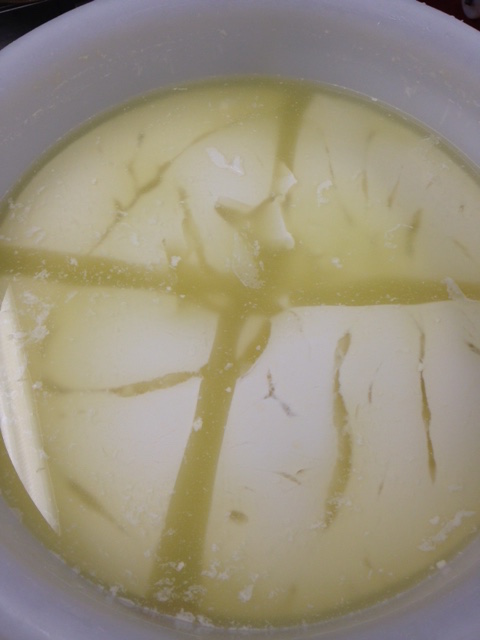
The mystery of the splits in the curd continues. After a period in late August and September with minimal or no splits at ladling, it came back again in October and November. As it happens this also coincided with a period in which I joined the Baron Bigod team who were in the middle of making Christmas cheese, battling staff illness and had a couple of people off on compassionate leave. Earlier in the year when we mentioned the splits to Jonny he had sounded surprised having not heard from his team about any issue but it soon became clear that although the Baron Bigod curd splits were smaller than those in the St Jude curd, they still existed.
One theory, especially because the splits tend to appear and be exacerbated at the end of the set was that the milk protein might have been made up of the wrong sorts. Julie sent a sample of milk to a lab in Cornwall for them to analyse its composition and they returned a result that suggested the milk while high in protein overall was perhaps a little low in casein which is responsible for the set and that therefore the total protein was made up of too many other types of protein like albumins which are whey proteins. Having had that result returned, she sent further samples off that had been frozen earlier in the year at a time when the set was particularly bad – not only split but also quite fragile. Unfortunately the results this time were not conclusive. So while there may be mileage in this avenue of research we can’t be sure yet.
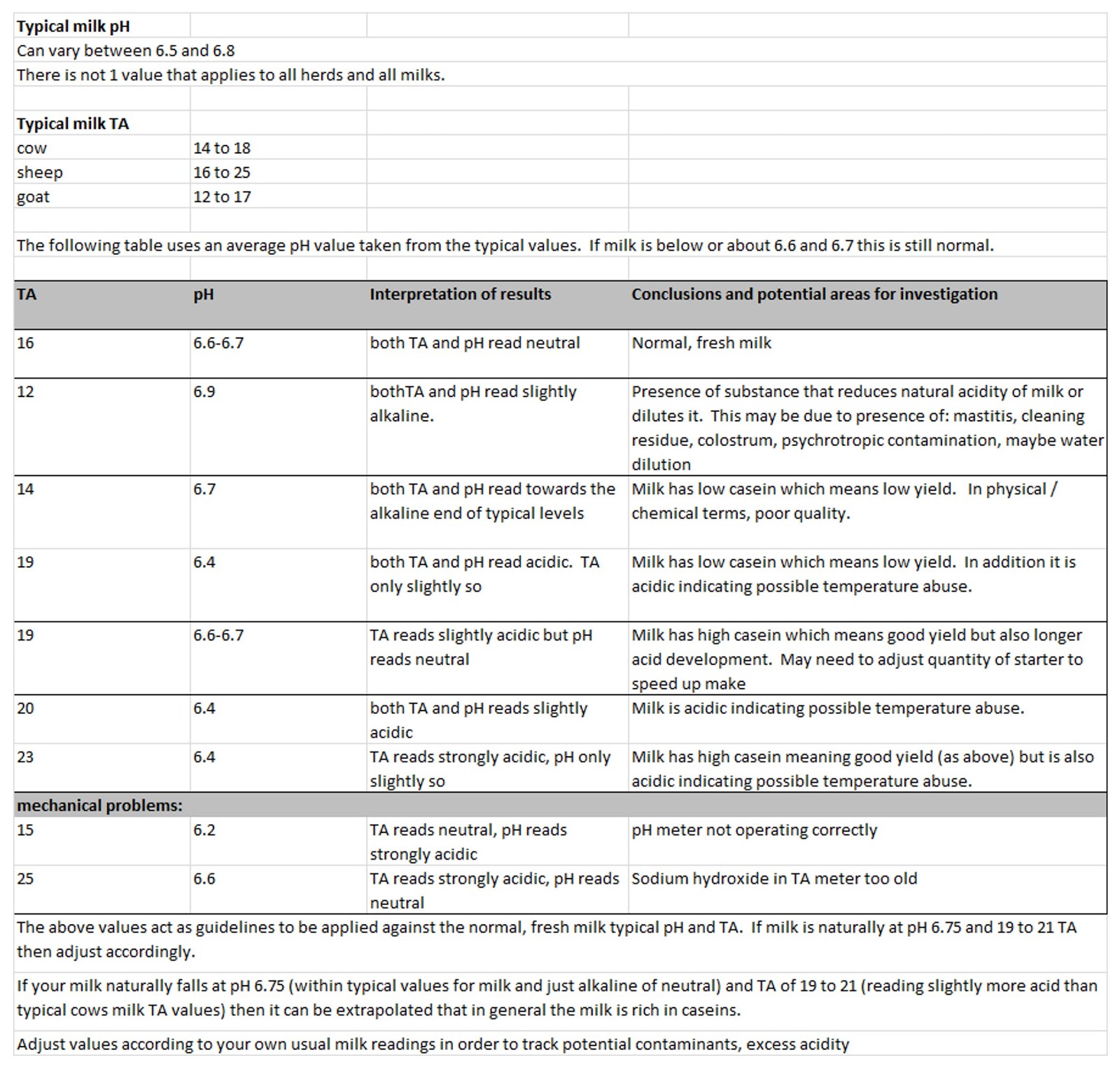
Another theory had been that the starters were not active enough and to be honest here we’re a little hazy on the details. Thierry had wondered if the cheeses were prone to phage but Julie didn’t feel the make was getting that much longer. A week ago we also had a visit from Martial Reynard, a technologist from Coquard who explained to us that the titratable acidity readings we were recording would show us the lactic acid development and by comparison to the pH we can gather information, not only on how active the starters are but it can perhaps help us put together a picture of how the chemical composition of the milk might be inhibiting our starters. Julie measures the TA of the fresh milk, at renneting and at ladling and hopes to find a reading of around 60 Dornic indicating that lactic acid is developing nicely. 60 degrees Dornic would indicate 6g lactic acid per litre. Recently we are getting readings closer to 40 and in fact the other week on the day of Martial’s visit our reading was 37. However, I began measuring TA on the Baron Bigod make this week and using the faster of their starters, there seems to be no starter inhibition on that make. Lactic acid developed to 90 – 109 Dornic by the end of the make, meaning they had between 9 & just under 11 grammes of lactic acid per litre. 6 to 7 grammes per litre would indicate that the milk has reached the acidity at which it would naturally coagulate or its isometric point. So it appears that in the St Jude curd for some reason we aren’t reaching the isometric point at ladling and the Baron Bigod whose set is more rennet based anyway is exceeding it by the end of the day and the final turn. Both cheeses do use the acid development to aid drainage. Brie style cheeses drain as a mixture of acid development shrinking the curd and squeezing out moisture as well as the rennet also carrying out that action. Lactic cheeses of course rely on the acid development more than that of the rennet as the rennet is basically there to support the acid rather than act as an equal draining agent.
Strangely although the curd is splitting, and the isometric point may not be being reached when we want it, the cheeses seem to be draining quite well by the first turn. This evening, when Julie measured the TA of the whey coming off the draining table at the first turn of the cheeses (a short wait after the end of ladling) it showed that the lactic acid was developing still, having finally made it to 60 Dornic or 6g lactic acid per litre and therefore the isometric point. So as this is achieved in the end, it should explain why the cheeses are draining despite the splits. However we also noticed this evening that the more split vats tended to have the lower TA at ladling despite having hit the right pH. This is something to monitor as so far this year just when we think we’ve identified a pattern eg different rennet amount or different temperature, the curd bucks the trend and confuses us all over again.
However the splits but also drainage theme seems to be echoed in the Baron Bigod makes this week too. The Bigods have had split curd before cutting but drained nicely. Last week however there were splits and the cheese had a softer consistency and stuck to the drainage mats (it makes the morning clean down much longer and more difficult). Last week’s St Jude also held in more moisture and Julie sent an instruction to Jacob at Neal’s Yard Dairy to dry a couple of the batches on arrival to help the rind set.
To be honest, we still have not got to the bottom of this yet but we have learned a lot about drainage and milk composition in the process so far. We’re now awaiting a technical paper from Martial to help us understand what information the TA might unlock.


 The Cheese Making Years