For just over a week at the end of December, I was back in the wellies; back at the Neal’s Yard Dairy coal face. I was working in the Covent Garden shop with Martin Tkalez, Nathan Coyte and Adam Verlander. It was knackering but it was really, really good fun. The shop was well organised, the atmosphere busy but controlled, friendly and high spirited. I have, since, slept for practically the whole 12 days of Christmas, but I had a great time.
People buy a lot of cheese at Christmas and they tend to make a special trip to the 2 Neal’s Yard Dairy shops in Covent Garden or Borough Market because, even in these austerity times, splashing out a bit on some nice cheese is a treat… and after all it is Christmas. In my full time days at Neal’s Yard, I would explain to friends and family that it got very busy; that consequently I was very busy. They all nodded sympathetically and seemingly understood, but you could tell that they didn’t really. They suggested meeting up for drinks or tried to hold social events and invited me, little realising that I had cheese to sell! Didn’t they know I had just worked 14 hours without a lunch break and didn’t have a day off until Christmas Day. When I did turn up (inevitably late) to any of the functions, I was in a slightly shell-shocked world of my own. I felt as though I was looking at my nearest and dearest from an out-of-body height. They smiled, laughed and chatted happily amongst themselves while I tried to join in and also tried not to fall asleep in my food / pint.
Days were regimented and organised. Up at 5 or earlier, no hanging about, straight into the shower, dressed, out the door. A lull while the train / bus / tube did its thing then into the shop or office. 15 minutes for the necessary strong coffee (thank god for sister company Monmouth Coffee Company) and then… Showtime! Be it retail, or more often in my case mail order, it was time to turn on the adrenaline and get going. Evenings, too, were a business like affair: head home, cook food that had been purchased especially for its quick cooking appeal, wash up (because if you don’t do it right there and then it won’t be done till January), all the while calculating at what hour I needed to be in bed, in order to get enough sleep, before I had to get up at godawful o’clock the following day.
It sounds like a nightmare when I list it like that, but the thing is, it wasn’t. It was a lot of fun and it certainly was team building. After your colleagues and you had been banded together through the battle campaign that was a Neal’s Yard Dairy cheese-selling Christmas, you were thick as thieves. You’d been on the front line together selling that Stichelton to literally hundreds of people a day. There was a bond there. On the memorable 2 years that the country was hit by massive snowfall (the winters of 2009 and 2010) when I was in charge of mail order, my man Friday Flynn Hall had keeled over with a nasty bout of chicken pox, over 45% of our deliveries were delayed due to weather conditions and I had around 900 anxious customers who were afraid of Christmas without their Colston Bassett to reassure, it was more than our well laid plans could handle. Jason Hinds (sales director and my direct boss) had to come to my rescue, help field the phone calls, help strategise and probably most important of all, did this with irrepressibly positive spirit and enthusiasm. Of all the baptisms of fire Christmas has thrown at me, this was the hottest. By hometime on Christmas Eve, I was so grateful, I would probably have taken a bullet for him.
You think on your feet, you react, you solve problems on the run and at the speed of light, but it isn’t flying by the seat of your pants. You have also planned for this one month of December since the end of the last one. You see your plans, thoughts and decisions tested and delivering success and probably the most important thing for me is this: you do your damndest to give all of the hundreds of people, to whom you are selling, the very best cheese and the very best service they have had in their lives. Just being ok is absolutely not good enough when they have made a special effort to get to the shops or have chosen the mail order. You fight for your department’s rights to the best cheese. No matter how many people you have spoken to that day, you listen to your customer carefully, get to know their likes and dislikes and advise them accordingly. In the case of mail order, you get their orders packed up perfectly and you follow up every single delivery online and track them until you know they have got to the right place. They didn’t have to choose Neal’s Yard. Waitrose cheese is really pretty good these days as are numerous little delis around the country. Some of the latter are excellent in fact. These people chose Neal’s Yard because they perceive it as a Christmas treat, so you make bloody sure it is.
I hate doing things badly. It’s a question of pride to do things as well as I can. The importance Neal’s Yard puts on its customer service, really plays to that instinct in me. It was a happy marriage.
So a week back in Covent Garden was busy, exhausting but fun. Jokes bantered back and forth. Cheese was cut. 50lb wheels of Cheddar were hauled around and chopped up into 2kg pieces for display. Stiltons and Sticheltons were halved, quartered and chopped up continuously. Customers queued down the street stretching past the shop window and obliterating the doorway of the shop next door (oops – sorry Cambridge Satchel Company) and yet waiting time didn’t exceed 20 minutes in all that time. While they waited, customers were fed cheese and are chatted to by the ‘door person’ who then directed them to the next free monger when it was their turn to be served. The busy atmosphere bred energy as the week inevitably built to what had been predicted as the busiest day. This year it was Friday 21st (luckily the world didn’t end). The 2 Neal’s Yard shops in that one day sold £75,000 of cheese. Gobsmacking is the only word that springs to mind.
That makes it 2 Christmases since leaving that I have returned for a fix of the Neal’s Yard Christmas Experience. Part of me actually yearns for more of the sort of Christmas build up I remember from the pre Neal’s Yard days, decorating the tree on Christmas Eve whilst listening to the Carols from Kings on the radio, making mince pies, making Christmas puddings, really enjoying the Christmas preparations and wrapping presents ahead of time rather than on Christmas morning. But it’s a hard habit to shift. Who knows, I might yet don the white wellies again….if they’ll have me back.
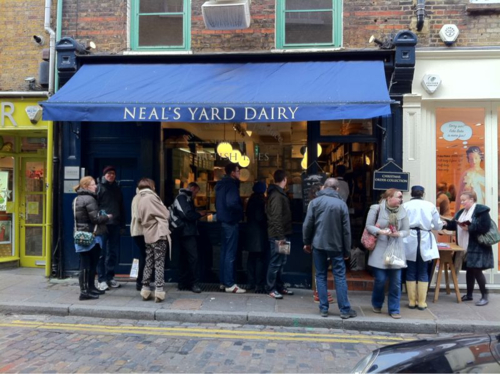 |
| the infamous Christmas Queue courtesy of the Rockets & Rayguns blog on Tumblr |





 The Cheese Making Years