Irons in the fire
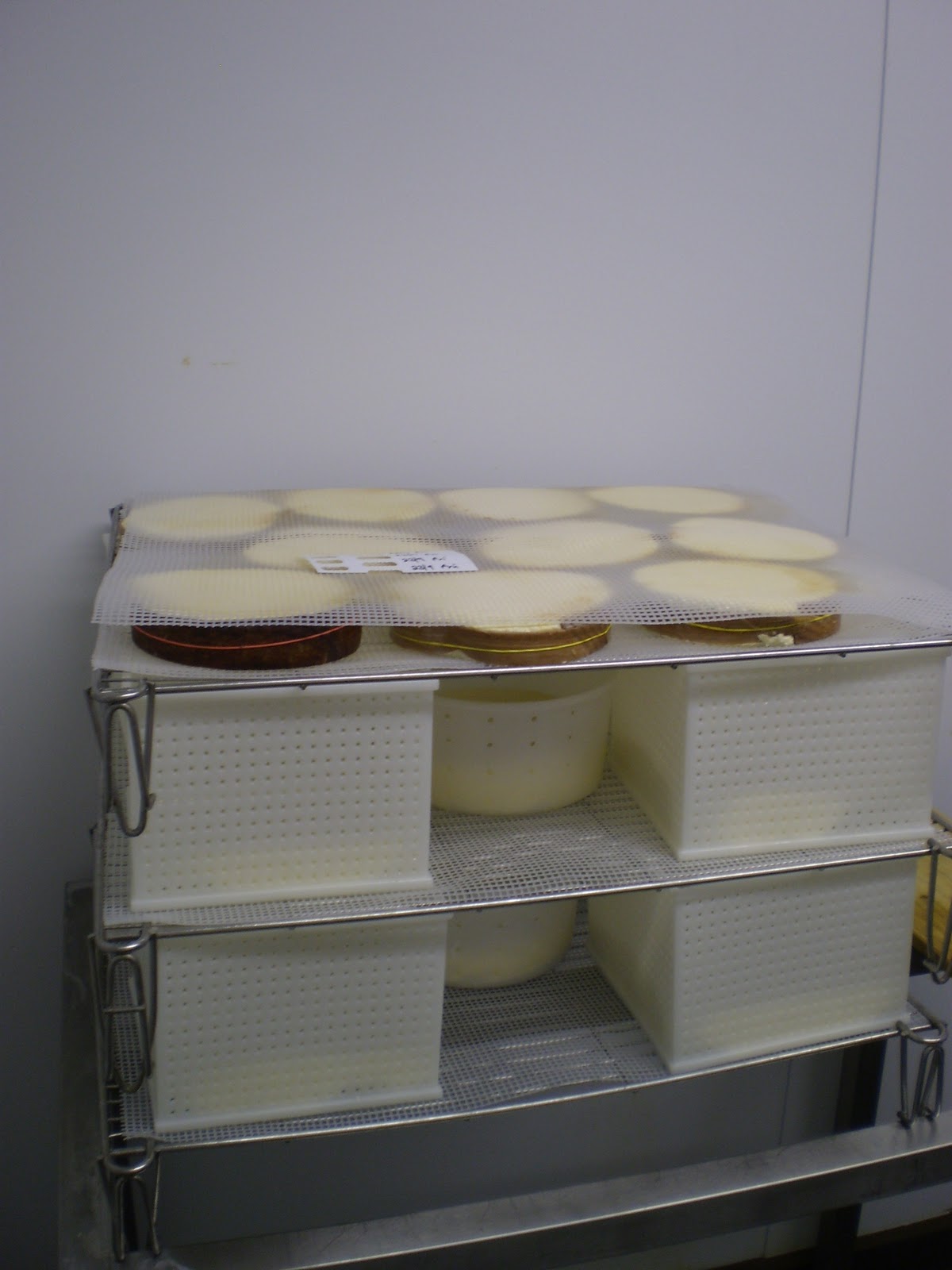
So far, the first cheese we’re going to try is a soft, mould-ripened Camembert / Coulommiers type. To that end there has been a lot of perusing of the online catalogue of Andre Coquard for equipment. Now for making a few trial batches of cheese it might seem a bit over the top to be ordering in equipment from France, but having researched this, I have to say I’m convinced it was the right move. Not only does it mean you’re buying things that are designed for the purpose of making a Camembert type of cheese (which let’s face it can only help), they also turned out to be substantially cheaper than the UK vendors, so much so that it’s even worth paying for a more expensive delivery charge to get everything over from France.
So order in and paid for, goods due to be delivered this week – perhaps even tomorrow, who knows, next week I might even be up there making the first batch of cheese. Is it too early to stop crossing my fingers I wonder?
The return of Julie Cheyney! All welcome St Jude
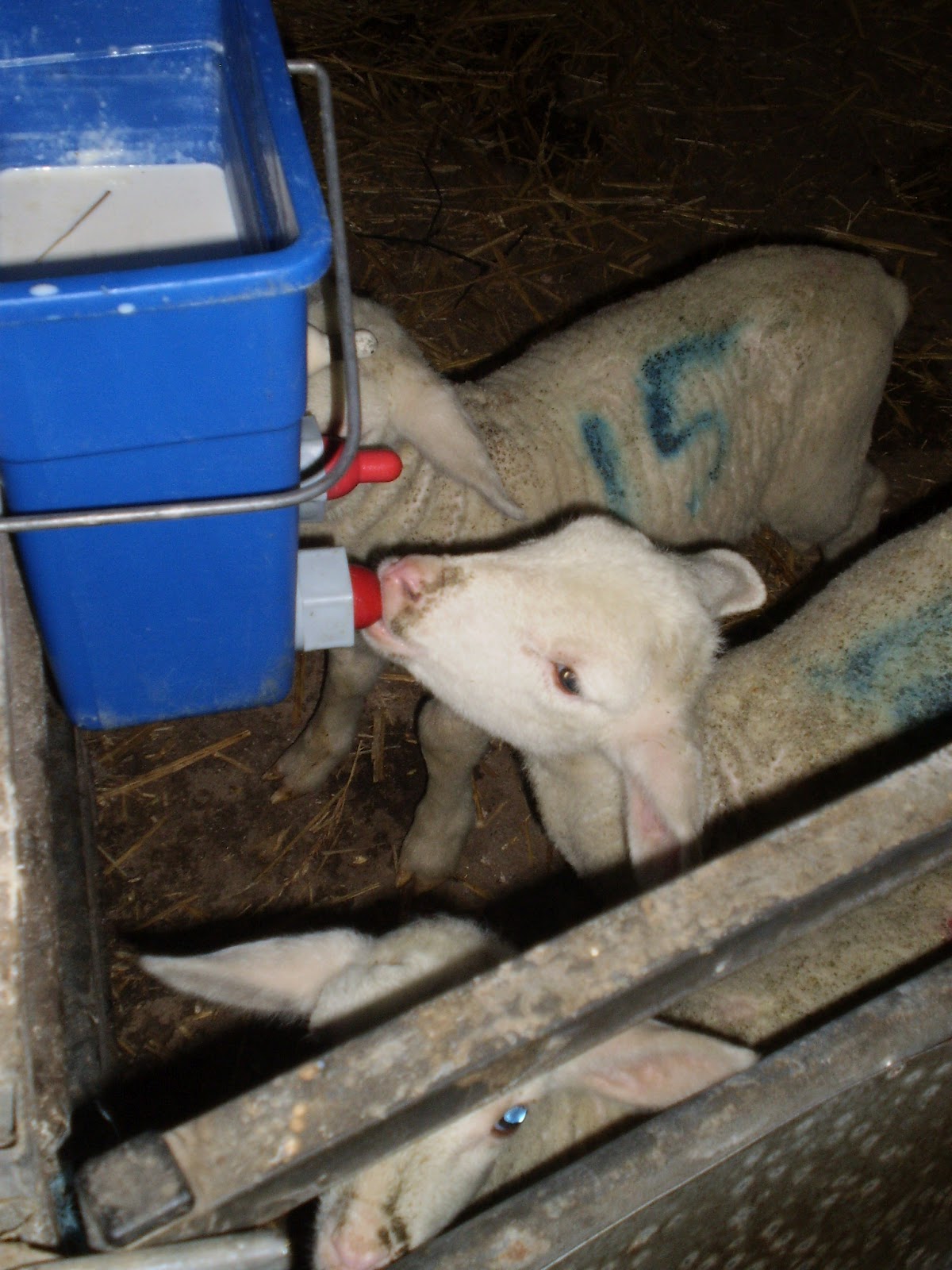
Springtime at Holker, Lambs, Sheeps Milk & St James
![]() |
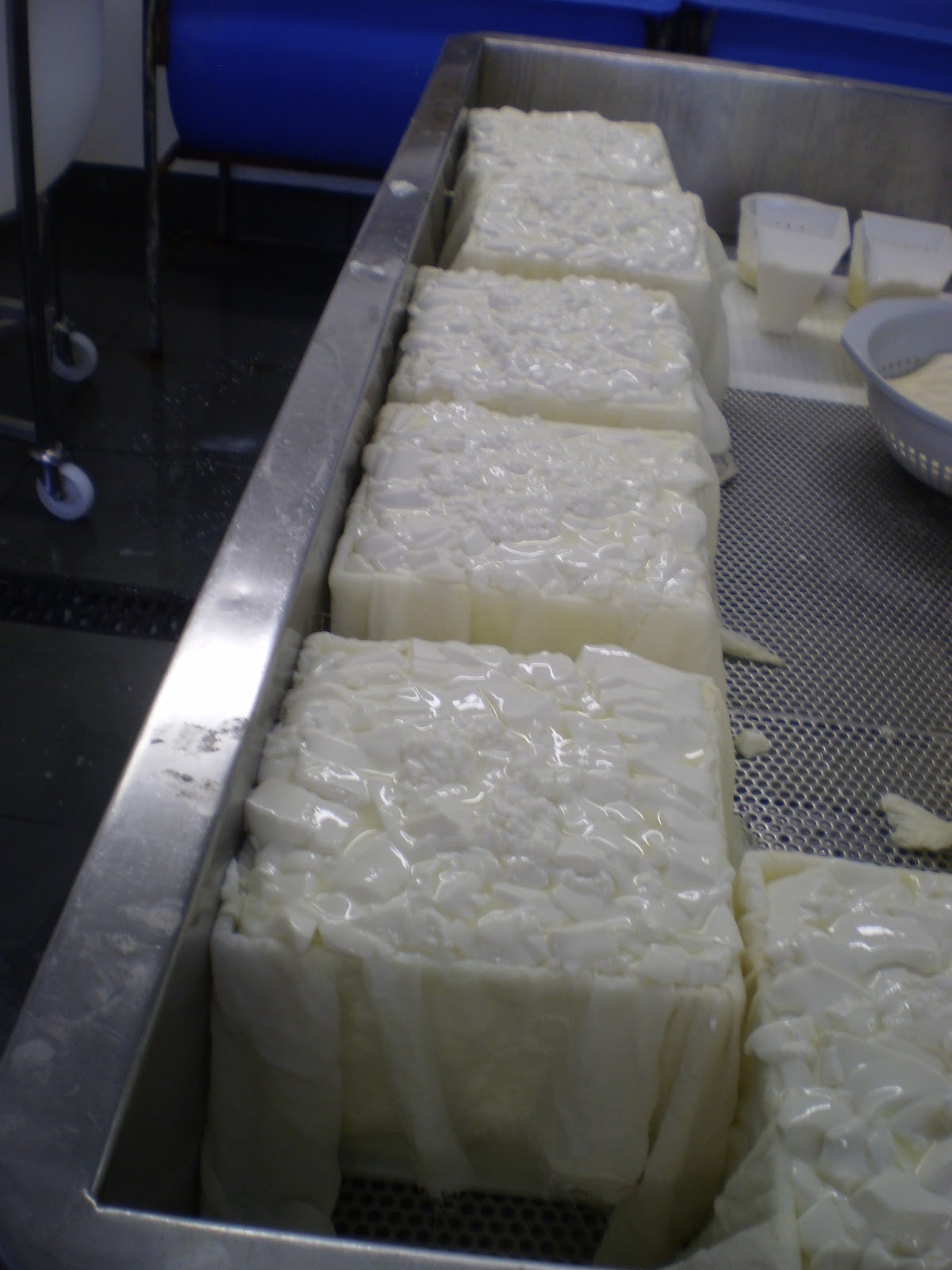
| St James curd in moulds from last season with some lactic Jersey experiments to the right (more on that later) |
![]() |
| Gratuituous cute puppy picture – from Nicola Robinson, Labradors by appointment to the Specialist Cheese Industry. |
Harvesting our olives at Contrada Lazzaretto & the Frantoio
![]() |
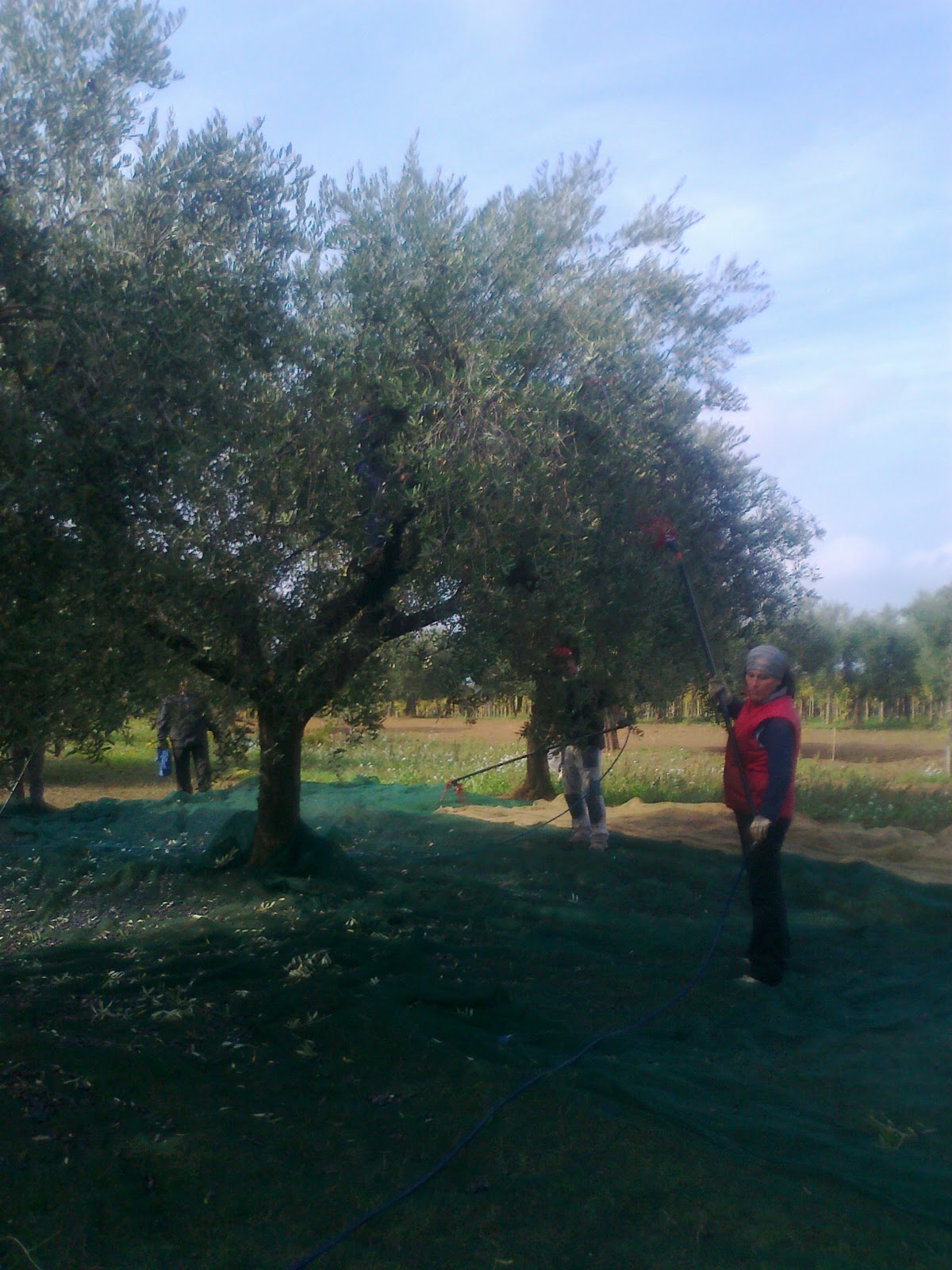
| Properly pruned olives with the centre open and the fruit at the edges |
By the nature of their different weights, the olives fall down where the leaves can either fall through the grid or be brushed out and to the side and blow away. Again this is a family activity, all hands to the pump and carried out with company and chatter. Sorted (all but a few remaining leaves that is) and finally put into sacks, it’s time to go to the Frantoio.
Olive Harvesting with the Farinas and Palladinis
![]() |
| Elodia harvesting with the motorised combs (see below) |
![]() |
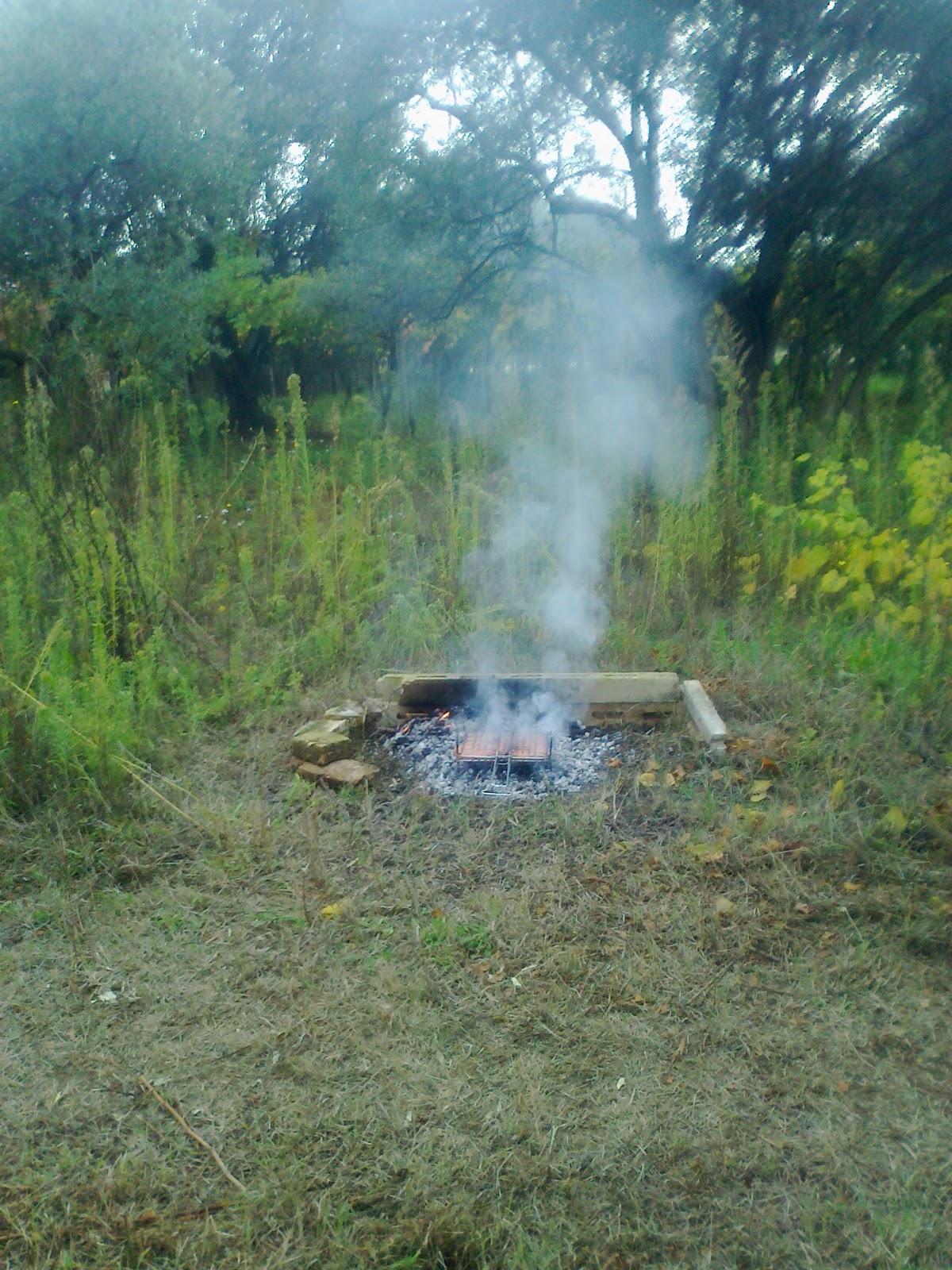
| Lunch is served on the car bonnet |
![]() |
| Sausages |
![]() |
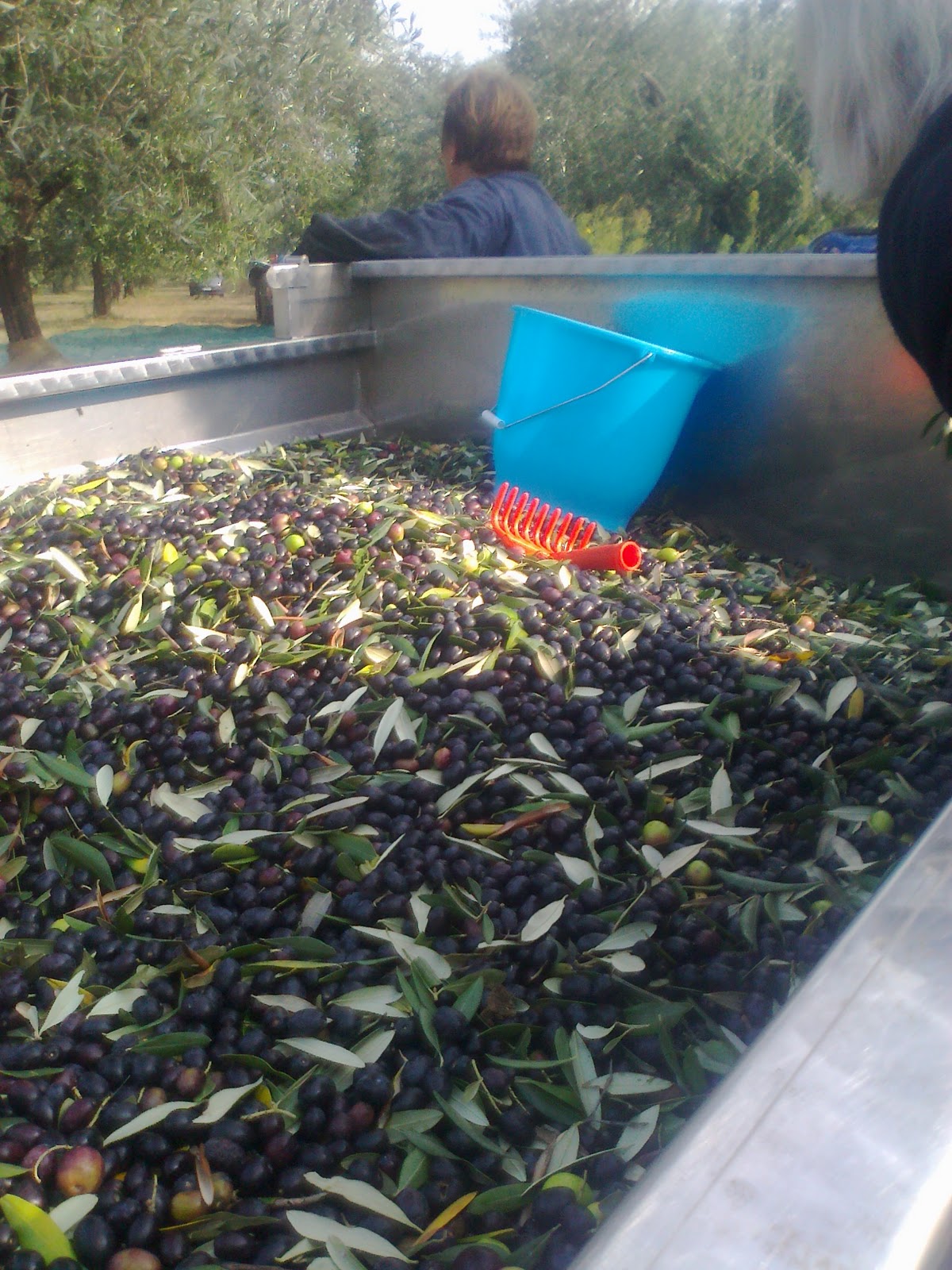
| The harvest ready for sorting |
The Mystery of the Non-setting Sheeps Curd
For starters, the milk that had been arriving in the dairy at 27C or more in fact earlier in the year is now about 18C or 19C. There are less sheep milking as more of them are served and those that are milking give less and less milk. The body temperature of each sheep and the temperature of milk coming from each sheep hasn’t changed, but other factors mean the milk is much colder. The sheep are milked before the cows. The pipework is cold in the mornings now as it’s autumn and in addition it’s dark when the milking starts so what sun or daylight there is has had no chance to raise the temperature of the air or surroundings. The milking system works by accumulating about 8 litres milk in a jar and then pumping it through into the dairy. However it now takes longer to accumulate the 8 litres allowing the milk longer to cool as it does so. It’s then pumped through cold pipes into the dairy.
Then there’s the room temperature or really to put it more accurately, drafts and currents of cold air. If you look at the thermometer in the room the temperature hasn’t dropped massively and the heaters are going full blast and turned up as high as they can be. However in the corridor where we do the packing the temperature is quite a bit colder which means that at this time of year, doors need to be closed to preserve the temperature in the dairy.
In the past couple of weeks the milk has gone from setting a bit too quickly because of its solids to setting very very slowly. Thinking back, the last of our fast setting milk was also at a point when the days were a little longer and then there was the brief Indian Summer when everyone went to the beach in October. As the weather broke, the setting problems begain. In looking at why this is happening (largely to me but it has happened to Martin too) we’ve looked very closely at the different ways in which temperature affects what we’re doing and how without us actually changing what we do, the parameters have entirely altered just because it’s autumn and we have less milk.
1. The milk is colder. Any time it is left standing before the starter goes in, used to be a brief period of pre-ripening time as it was at 27C but very little is happening at 18C. The lactic acid bacteria activity from the milk itself and from the starter once added is less even if the milk is heated and the starter added at around 31C because where there was a pre-ripening period, now there isn’t. This in turn affects the quality of the set because the beginnings of acidification would free up a certain amount of calcium ions from the milk which helps for a good set and increases the yield.
2. The milk needs to be warmed up much more slowly and consistently. To heat quickly, using the ‘flag’ or mini radiator type thing we use to warm milk (it works by running hot water through it) and stir the hot milk in, means it loses temperature more quickly.
3. Even warmed more slowly, the milk doesn’t keep its temperature in the same way because there’s much less of it. Whereas with quantities like 70 or 80 litres, the milk might drop 1 degree between adding starter and then adding rennet an hour later, it can now drop 2 or 3 degrees. Losing temperature more easily again of course means the set will be weaker.
4. The top of the curd, where you usually test the set, is colder than the lower part of the vat as it’s the area that’s open to the air the most. Often this will set more weakly than lower down the vat.
Even by increasing rennet and trying to keep the vat next to the dairy’s heaters at all times after it’s been heated, the set just isn’t as strong as it has been. The implications of this on the cheese are pretty huge.
1. Weak curd forms a more sloppy substance going into the cloths. Small and more mushy particles of curd clog up the cloths and reduce the effectiveness with which they let the cheeses drain.
2. Weaker and colder curd drains more slowly anyway. It doesn’t free drain in the same way. More cloth pulling only has a limited effectiveness as the cloths are clogged up already and also because with a weaker structure you end up losing fats and squashing the nutrients out of the curd by using more force but still finding that it feels soft and wet in texture.
And the effects of the weaker curd on the drainage cloths are:
Badly formed rinds because they are largely formed from the soft particles that collected on the cloths. When salting or maturing further, these rinds are loose, too moist and come away from the cheese.
Cheeses that hold free moisture.
That old enemy we’ve been fighting with our draining cloths! Because the cloths are clogged up, hindering drainage but also because the curd didn’t have enough resistance to the cloths to force out the free moisture when they were pulled up tightly and in the end slightly collapsed under the pressure we have floppier and less stable cheeses when they are turned out. The effect of this is that the cheeses do not mature in a stable manner. They don’t retain the calcium which will allow a full and elastic breakdown and they develop what is more of a lactic cheese texture with a very runny breakdown just under the rinds and a curdy, moist, acidic centre. It’s not that this is unpleasant to eat, in fact it can be very tasty, it’s just not what we want.
Before I began making cheese, I might have tried to explain this to a customer by saying that at the end of lactation with the milk composition being different and the pasture being different, the cheese would change. Having made cheese for a few months, I would now tell it very differently. The biggest change has been the temperature. So much for terroir!
Enter the cows
![]() |
| One of the ladies, in the barn, with a curious sheep to the left |
My first day back in the dairy was the first morning milking and they yielded us probably about 30 litres milk. Since then they have settled happily in to their once a day milking regime and I’d say in the last week we’re getting nearer to 60 litres. Nicola has been taking advice on their feed, switched the cake they get in the evening to a better quality and more nutritious one and given them a mineral lick all of which have contributed to them producing more milk but also milk with what seems like good solids. Otherwise their diet is largely hay based and not particularly intensive. They came in looking a little thin shortly after giving birth but are gaining condition and seem to be doing well on their once a day milking regime. Not too taxing and yet yielding us plenty of milk and having now worked out a more regular size, we’re making roughly 10 cheeses weighing about 500g (probably) per day.
When I first started at Holker, Martin talked about how particular sheeps milk is and how once you get used to it, you’ll look at cows milk thinking, ‘What’s wrong with this milk’. It has to be said I wasn’t entirely prepared for just how different the 2 milks would be. The difference is (and was) perhaps heightened because the sheeps milk is end of lactation milk so the solids are huge – 8% fat and over 6% protein on one recent test. The cows milk is early lactation and just naturally has much lower solids anyway than sheeps milk. The first obvious difference however is the colour. Cows milk is more yellow but at the same time more translucent, sheeps milk bright white and just standing until the end of the milking, there is a thin layer of yellow cream on top of the vat containing the cows milk. The colour difference remains throughout the make as well, the whey is clearer and more yellow when cutting the cows milk, the sheeps milk whey, while a yellow colour is slightly thicker and whiter.
![]() |
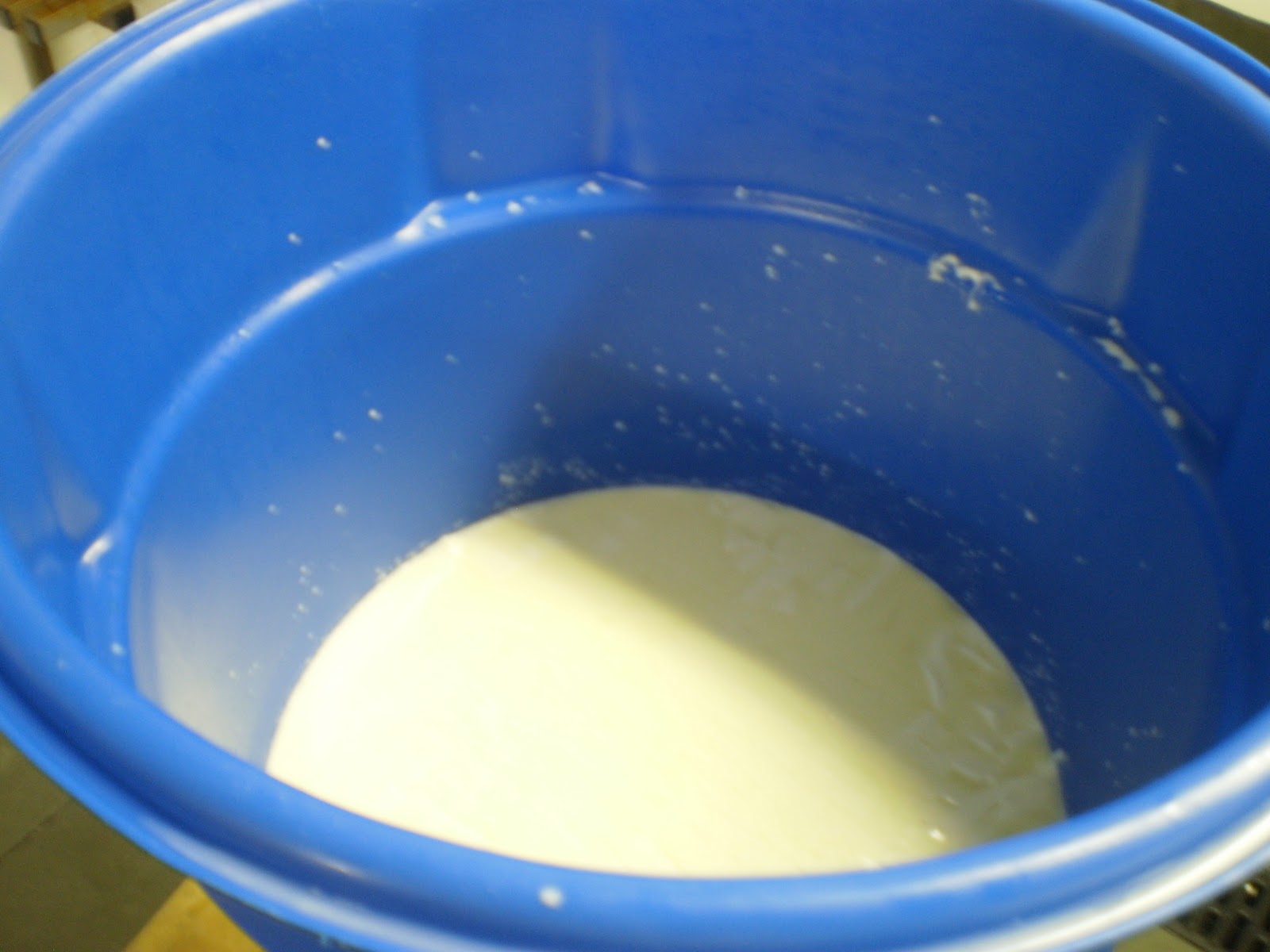
| Cows milk curd after cutting |
![]() |
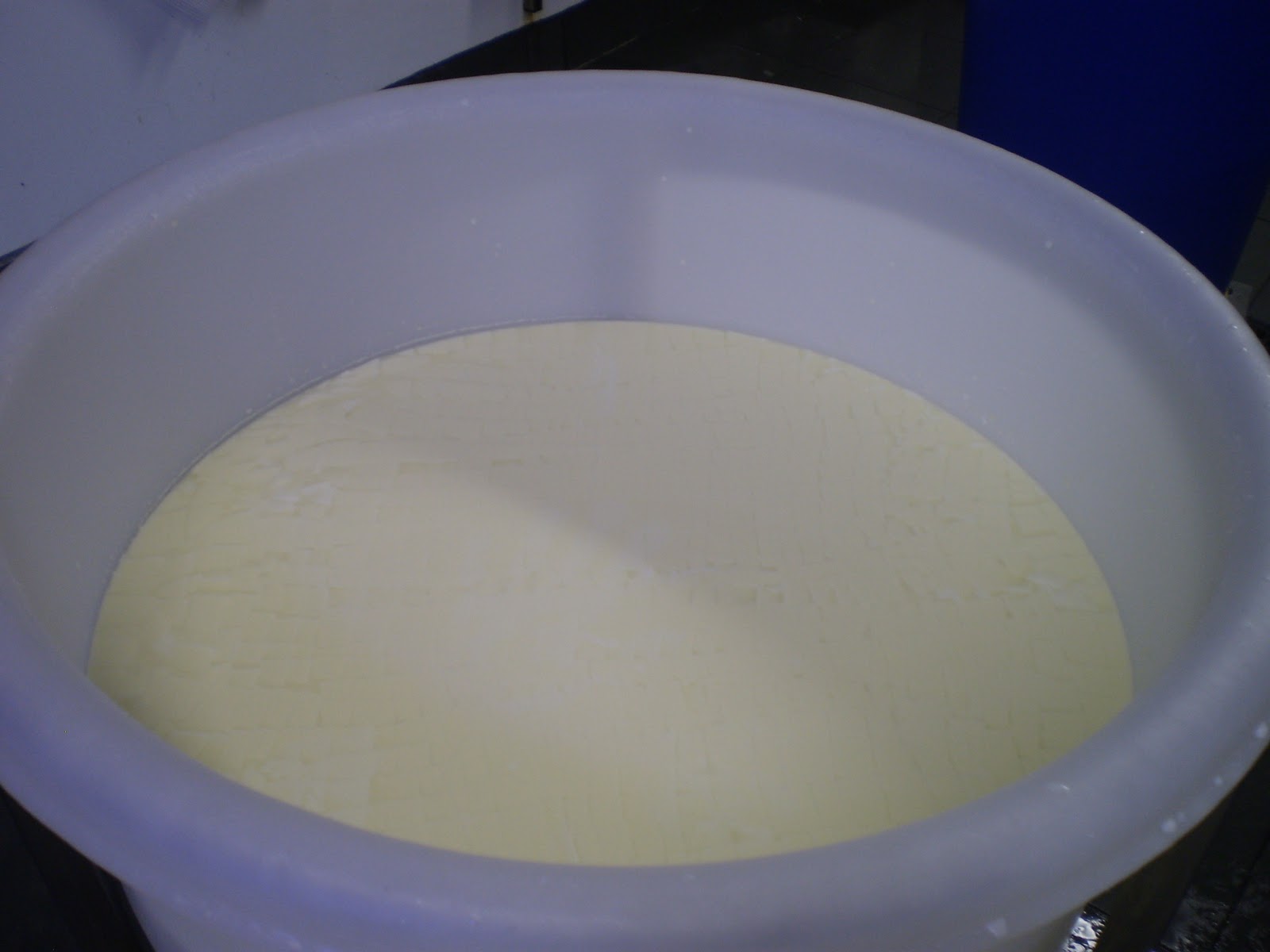
| Sheeps milk curd after cutting |
The texture is very different too. In fact it was tricky working out when to cut the cows curd in the first couple of days because the set is much more delicate. After a couple of days we felt it was going to naturally need more rennet than the sheeps milk and have managed to achieve a firmer set as a result. However when looking for the ‘clean break’ when determining when to cut the curd, the set of the cows milk when it breaks cleanly is a lot more jelly-like than that of the sheeps milk which is dense and robust.
Drainage is hugely different too. Whereas the St James needs regular cloth pulling and done pretty forcefully at that, the cows milk cheese (current working name Feallan from the Old English for Fall i.e. Autumn) needs cloth pulling largely much more gently and rather than forcing moisture out, you’re just trying your damndest to keep up with the natural drainage of the curd. Where St James needs to sit overnight in its cloths with a follower on, by about 3pm Feallan has been turned once in its cloths and ready to be turned again and taken out of the cloths. In future we’ll get followers to be put onto the Feallan too but for now, they just drain without pressure overnight which leads to slightly less reliable shapes but the drainage seems to happen ok.
![]() |
| Early batches of Feallan and St James on Day 2 in the hastening room before salting. |
As for maturing, well we have a couple of batches that we tried binding in spruce cambian (the leather textured layer below the bark that is used to bind Vacherin) which Martin set off into the Holker Estate to cut off trees in their timber stores. More recent batches have been left to mature without and when we can compare and contrast the matured cheeses, we’ll get an idea of which tastes best. Currently though, they are being washed a couple of times a week until they are roughly 2 weeks old by which time they have a reasonably convincing covering of B. linens and then they are being wrapped to continue maturing in paper. Next Tuesday, Bronwen and David from Neal’s Yard Dairy will come and visit the farm and we will get a chance to try some of the older cheeses with them. The cheeses will be about 5 weeks old by then and some of the oldest have a nice breakdown already. It will be very interesting to hear what they think.
Cheese in Bra
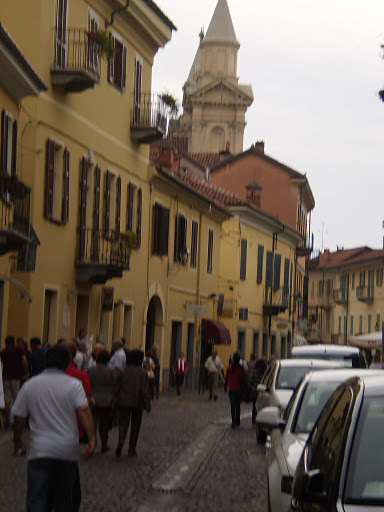
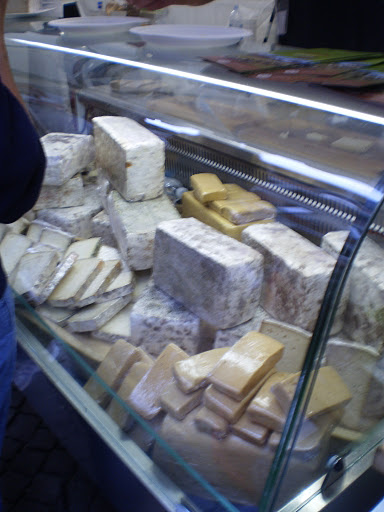
Bra is a self contained town with enough of its own industry to mean it doesn’t rely on Slow Food for its trade and existence. It existed before Carlo Petrini started the movement and it continues to maintain its independence. That said though, I doubt even in Italy it would have quite the same amount of good food and restaurants if it weren’t for the Slow Food movement having its headquarters here. Then, every 2 years the town puts on a homage to all things Cheese and quite literally the entire town dedicates itself to the promotion of cheese. Talks and tastings are held in some of the baroque buildings that form the older centre of Bra, its streets and piazzas become a market for cheese makers (particularly those who Slow Food have designated worthy of Presidia status – a protection for a highly artisan or unusual cheese that is in danger of dying out) and cheese maturers or retailers such as my erstwhile colleagues Neal’s Yard Dairy.
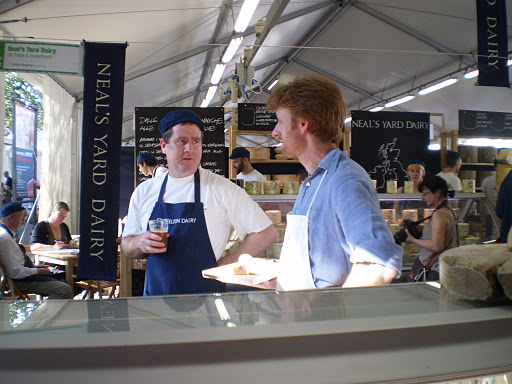
Neal’s Yard Dairy has been selling cheese in Bra since 2003. Randolph first visited the fair 2 years before that to help out a friend, Ari Weinzweig of Zingermans who had been due to give a talk there and was unable to get a flight post 9/11. He was simply struck by the unique atmosphere of the place and the abundance of interesting cheeses and people there – completely unlike any trade show or food show held in the UK. The town is entirely welcoming to its huge influx of visitors too with local shops getting behind the idea and theming their displays around cheese for the duration of the fiera. If this was the UK, much as I hate to talk my country down, there would be groups of people moaning about parking and rubbish and the disruption to their daily routines.
When we took the first stand in 2003 we noticed further benefits too. Italians of all walks of life have a much more extensive vocabulary to describe food than the Brits, they are interested and keen to try new things and pretty forthright about saying what they think be it good or bad. For a shop that values feedback, these comments on our cheeses are hugely interesting. There was also the minor consideration that as a place to meet and socialise with wholesale customers, the atmosphere of Bra can’t be bettered. Maybe it’s all that Italian Dolce Vita, or ready access to Barolo, or the cafe society but people drop by and chat in a much more relaxed way than they ever do at any trade fair in the UK or USA and simply by enjoying a coffee together and having a chat, great ideas can spring up in a completely natural and unpressured way.
This year was my first year out there as a cheesemaker. Before leaving NYD, Jason Hinds who had basically been my boss, asked if I’d join them on the stand as I’m an Italian speaker and, more to the point, I suspect, if I was there, my Italian speaking and absolute Trojan parents would be more likely to come along too and help explain and taste out cheeses to the Italian public. As such, of course, there is a different perspective to the one you have as a cheesemonger. I particularly wanted to know what they thought of the cheese and had a sneaky feeling they might well like it. This proved to be the case. I was waiting for people to come back with comments for improvements, over salted, too strong etc but didn’t really hear much of that. On the contrary I did hear that pretty much everyone liked it. To say that was a big pat on the back would be understating it really. Of course the batches had been deliberately selected by Bronwen and the buying team to appeal to the Italian palate (a bit more adventurous and raucous than the UK) but between her selection and our cheesemaking, we made them happy.
With that established, the next thing I enjoyed while out there was meeting former colleagues and the wider family of the NYD network. Mateo and Andy from Jasper Hill in Vermont were out there with their families, Joe Schneider and his Stichelton team were on the stand (naturally), Caroline and Will who make Stawley, Julie Cheyney formerly of Tunworth, Kate Arding who I worked with back in my early NYD days and who is now part of the Culture Magazine team, Val Bines, Jamie Montgomery, Mary Holbrook… I could go on and on. It is a bit like in part a great big reunion of a lot of people you really want to chat to and you sell cheese and talk about your different cheeses altogether. Yes it’s definitely an occasion for the cheese geek but as such it’s very rewarding and interesting.
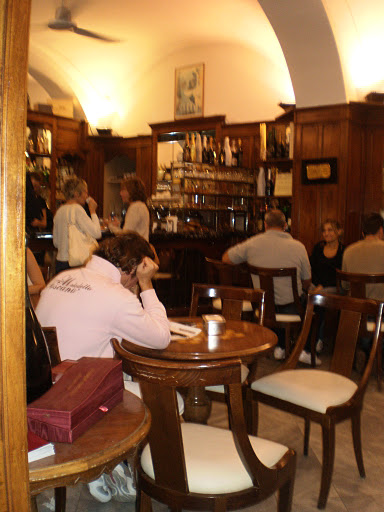
And have I mentioned the eating out possibilities yet? Not only is this Italy but it’s Piedmont, widely regarded as one of the best areas of Italy for food and wine and everyone is putting on the classic dishes over this weekend: vitello tonnato (veal with a tuna emulsion basically), vegetable souffles, fresh tajarin (thin tagliatelle) with butter and sage, hand pinched ravioli (agnolotti del plin), carne cruda (thinly chopped raw rose veal with olive oil), salsiccia di bra (raw rose veal sausages – seriously don’t knock it if you haven’t tried it they are addictive), meat braised in Barolo and panna cotta. And then there’s Caffe Converso, the ONLY place in Bra to get your coffee and pastries with its wood panelled walls and the little shop next door selling home made chocolates, nougat and their own chestnut cream and upmarket Nutella.
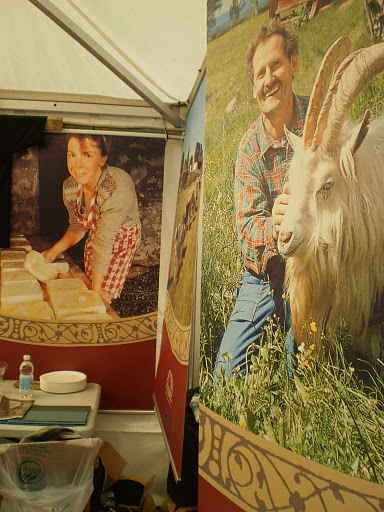
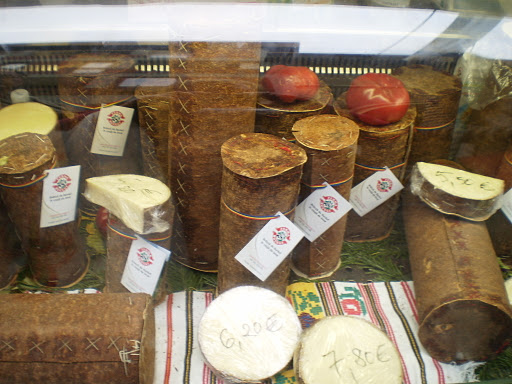
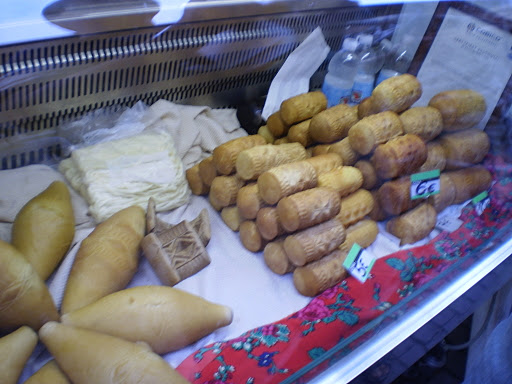
All this and the chance to learn about other cheeses and try new things too. The Strada dei Presidii is the road along which the endangered cheeses are displayed. This ranges from the weird and wonderful like Swedish goats cheese, smoked cheese from Poland, to the more recognisable like Bitto an Italian mountain cheese like an aged and drier Gruyere or Sbrinz and finally Somerset Cheddar represented by Montgomerys, Keens and Westcombe. Cheddar may not initially seem an endangered cheese but given that it is ubiquitously used as a name for hard block cheese these days, the Somerset Cheddar boys are claiming the name back for those still making cheese in the original county of Somerset and following an old fashioned and traditional recipe.
For anyone with even a passing interest in all things Cheese that hasn’t discovered it yet, this fair is worth the trip. See you there in 2013!
For another perspective on the Cheese event and more pics too have a look at Justine’s blog littlemisslocal.com
How do you cook?
I do take the temperature of the milk when the starter goes in and from that, I’ll work out (in a slightly guess-work style it has to be said) how much rennet I want to add to get the set time of an hour and a half. Sometimes this works out and sometimes I get it wrong and it goes slower than that but, on the whole, it does seem to work out that if the milk is around 27C then 1ml rennet to 5l milk seems to be the right quantity. If the milk is warmer, say around 30C, then 1ml rennet to 7l milk seems to get a set time of an hour and a half. If hotter, still like 33C which was the temperature on the occasion I first got the hour and a half set by adding too little rennet by mistake, 1ml rennet to 10l milk. So I adjust how much rennet to use roughly based around that scale.
I think that this suits me better because I’m not the sort of person who can cook to a recipe every day. I like to get the gist of a technique and then cook it my way. Certainly looking ahead to when I’m doing my own thing, this is something I’d be interested in continuing. At the beginning of the season, of course, I couldn’t apply this attitude to cooking, to cheesemaking. I needed to stick to the recipe religiously because I didn’t have the experience and also because I’m making cheese for someone else. It wasn’t my sales on the line if I messed it up. I suppose with a bit of experience and practice I’ve got more confidence now to react more to the circumstances of the milk temperature on the day rather than make it do what I want and heat it to a specific temperature every day.
It seems to be a more forgiving recipe that we’re using now with the longer set. There’s more moisture but it’s not free moisture. The curd is more fragile and needs more gentle cloth pulling but still seems to drain appropriately anyway. Even moister cheeses still don’t have the levels of free moisture. The first cheeses made with this sort of set, are maturing rather nicely. I like the texture of the one cheese I’ve kept back in the stores (and that I’ve marked for me to buy for myself when it’s ready).
The other thing is that we’re leaving the starter for about an hour to mix and get working in the liquid milk before adding the rennet. The idea behind this is that the bacteria can get going better because it should be easier for them to get distributed and to get dividing in a liquid rather than in the set curd. Or so we hypothesise anyway. Another thing that should help this also is the fact that at temperatures like 27C, the milk reaches its first fragile set much more slowly. In fact it can still be liquid an hour after the rennet has been added but still reaches the firm set (or second set as it can be known) in about an hour and a half or a little longer.
My gut feeling is that this long set and longer ripening time will make a good texture and flavour when the cheeses are mature and ready to sell. Time will tell I suppose, but if the mistake cheeses of the 28th June are anything to go by, I can allow myself to be cautiously optimistic.