Lots of bits and pieces have been happening recently. Building work has slowed down a bit since the heady days when the walls went up. The thing holding us up is that the concrete laid as foundations for our floor has cracks and although it’s quite likely that these are just cracks caused by the concrete drying, we need to be sure they aren’t a sign of something more serious like subsidence. So we wait for someone with structural engineering knowledge to assess them and sign them off.
Once that is done we can put in the framework for the first floor and with that in place, we can start to put in the panelling that forms the interior walls. In other words, we’ll have rooms.
Meanwhile I have been working on paperwork still – the end is in sight finally. Actually, I hope it is, every time I say that to myself, I remember some other record sheet or schedule that I’ll need and it goes on the job list. We’ve ordered and paid for our industrial dishwasher, the final payment on the equipment from Avedemil has been made and 4 pallets including vat, racks, wash tubs, multimoulds and stainless steel tables should soon be on their way to us. The pipework to divert our milk out of the main milkline before it can be cooled or can get into the bulk tank is on order and we’re pushing for it to be in by 11th August.
Why 11th August did you ask? Well because officially I have a date to move south. 7th August. And come what may, I will be on the payroll as of the 11th as with Rose on holiday in Greece, I’ll be managing the build and using our warm milk, I’ll be making trial cheeses in the kitchen of my house and then maturing them in a wine fridge. It will be good to get my hands on some curds again – just have to remember to order a few key bits of gear: starters, a tub to make cheese in, an electric blanket and indeed the wine fridge.
The trial cheesemaking came about on a visit from Jason Hinds, David Lockwood and Bronwen Percival from Neal’s Yard Dairy. They came for an informal morning chat to look at progress, talk about the quality of cheese they are looking for and its implications for milk quality, sales and advice on our financials. All three of them felt that as soon as the milk was in place, making some kitchen trials would be well worth the exercise in understanding where the milk quality is at this year (it’s bound to be rather different to February when we last did any testing and again to last summer when I was making trial cheeses at SAF) as well as hopefully having something to taste and start to comment on. We’re going to go down to London for a big cheese tasting with Bronwen at the end of August which will be a useful calibration exercise. In theory I know what their cheeses are like but it’s a few years now since I’ve been tasting them regularly and I’ll need a refresher to check out our washed rind competition. For Rose, seeing how Bronwen tastes, assesses flavour and quality and understanding what she is looking for will be invaluable. It’s her job to look after sales when we’re up and running so a bit of calibration with one of our customers (we hope) can only be a good thing.
So it’s a mixed bag as I’m sure will be familiar to anyone who’s been involved in building work: some progress, some delays and on not too many occasions the odd step backwards. Overall though we’re getting there and with a confirmed date in the diary for me to start work, it’s getting real.
Chris George, like me, also ex of Neal’s Yard Dairy, sampling cheese on a tour of their maturing facility, back in 2008 (thanks to NYD for the photo – oh yeah and Chris)
‘A Cheese Grating Course?’ asked more than one of my non cheese friends when I told them I was going to learn more about cheese grading.
‘No, GRADING,’ I replied, realising again that I have indeed entered the realms of cheese nerdery that doesn’t quite translate to the outside world. ‘That’s the process by which cheeses are evaluated either during maturation in order to determine which market they should be sold into (retailers, wholesalers, exporters) or also during judging at a cheese show. You assess the cheese for texture, body and flavour and note down your observations for review later.’
‘You eat cheese all day? Wow, my kind of course.’
Not exactly, but I must say it was a very pleasant way to spend the day and yes, cheese was consumed…in the interests of education you understand.
About a fortnight ago at the beginning of February, Julie Cheney hosted a day’s course in her house on the subject of Cheese Grading. The course was being taught by Jayne Hickinbotham of Dee Dairy Services who is one of the UK cheese industry’s unsung heros. After years in manufacturing with big creameries like Dairycrest, she went freelance and now operates as a consultant who can pretty much do anything from calibrate your thermometers to write your HACCP to train your staff in Dairy Hygiene to help you write up risk analysis justifying the more traditional of cheese techniques like use of raw milk and use of wood in maturation rooms. She is also a trained RPA auditor and Cheese and Butter grader and until she stood down from it, was the Chief Steward responsible for the Cheese and Dairy Show at the Great Yorkshire Show. As if that wasn’t enough, she co-wrote the Specialist Cheesemakers Section of the SALSA + SCA standard and is one of their Dairy mentors and auditors as well as sitting on the SCA’s Technical Committee. She knows her stuff.
The course, which, to give it it’s proper name was ‘Sensory Analysis (Grading and Selecting) and Managing Variation of Hard, Soft & Blue Cheese’ was attended by a very interesting bunch of people. Again, we left a cheese function with Rose remarking, ‘Cheese people are all so lovely!’
Jayne began by explaining the purpose of grading and how it was different from tasting as a sales tool. This is a topic that I know she feels strongly about from her experiences as judge. If you are tasting as a sales tool, it’s ok to think ‘I don’t like that,’ or ‘I really like that’. If you are grading, subjective descriptions like that only lead to arguments and get you nowhere. Grading needs objective and descriptive records.
For instance, a grader might record: ‘metallic, acidic, sour flavour, weak body’.
A sales taster would be more likely to communicate: ‘Don’t like that much, metallic, acidic and sour.’
You can’t really argue with the objective description. It is what it is. You can however argue with the subjective one and by being subjective it’s more likely to put the manufacturer on the defensive into the bargain.
‘What do you mean you don’t like it? I don’t think it tastes at all metallic.’ And so on.
An interesting point too was that Jayne even refined it down to the choice of vocabulary. ‘Astringent’ for instance we discovered was something that some of us identified as bitter and others as tannic. That means it’s not clear or objective enough for grading.
Remaining with vocabulary, we discussed the difference between ‘body’ and ‘texture’; body being mass, solidity, density and something you can touch while texture is formation of structure and is visible. We talked about use of certain words and their associations during grading. You don’t use the word ‘sweetness’ as a positive descriptor with cheese. It describes a fault relating to whey retention or adding potassium sorbate as a mould inhibitor (in industrial block cheeses).
We covered analysis procedures and hygiene – including personal hygiene. You can’t accurately judge flavours in the presence of strong perfumes and you particularly can’t if you’ve just used very perfumed handsoap. This latter is especially relevant to hard cheeses where you don’t just taste the cheese but also hold the sample between your fingers and knead it to assess the texture. Then you taste it.
‘Mmmm – tastes like…um…freesias???’
Jayne even warned us about the planning a professional grader puts into their packed lunch. She once suffered by having packed an orange to eat and realised only afterwards that the smell of orange oil on her hands which persisted after handwashing was distracting her from the product she was grading. Several further washes of the hands in neutral soap were required.
It wasn’t all theory though, we also had the milk drinking challenge. Six different milks were poured out and handed out in a blind tasting.
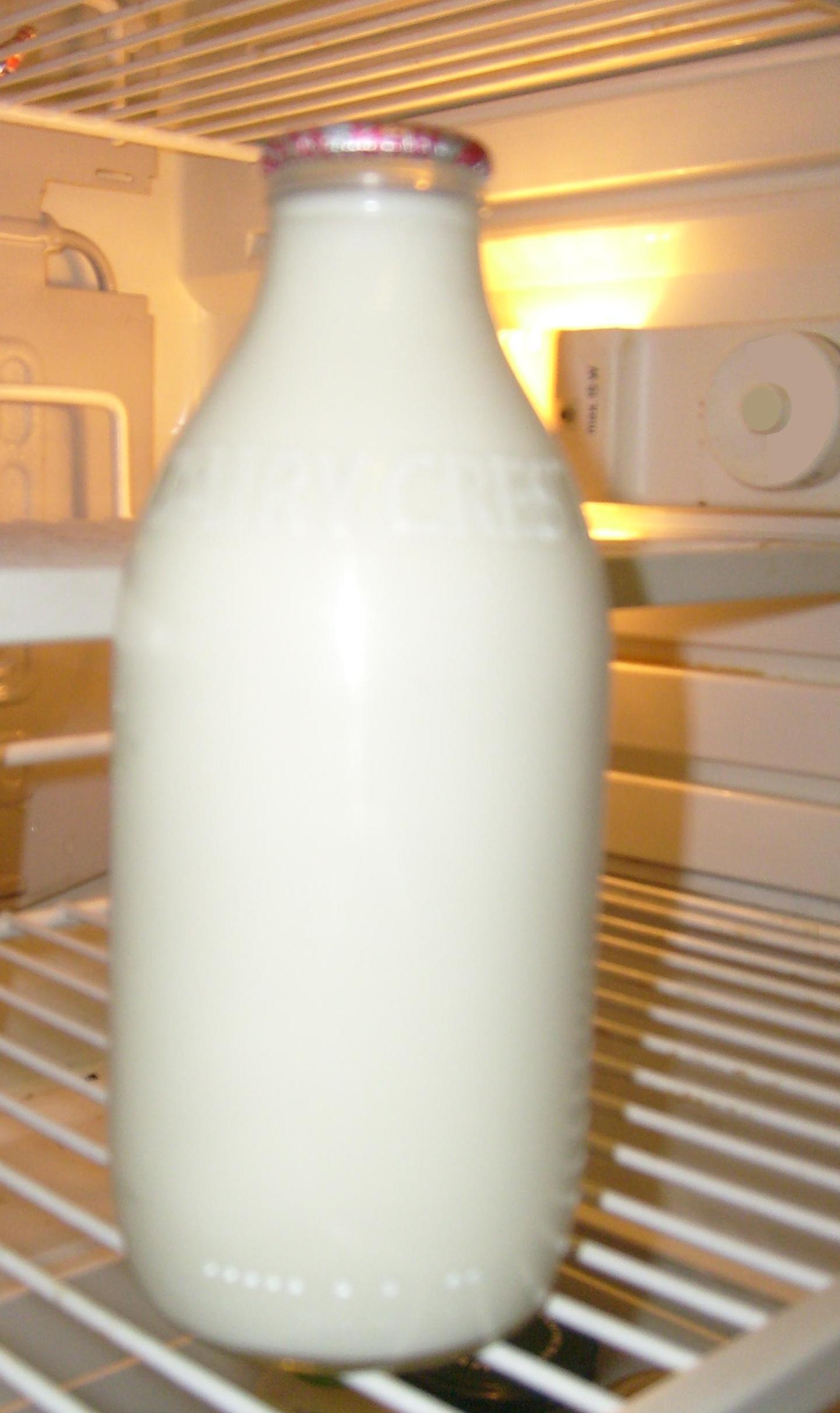
First was the control: standard full fat milk from the supermarket. It was, white and uniform in appearance with a buttery and slightly animal aroma, tasted slightly metallic but with a caramel note and was relatively weak in body. Jayne pointed out that it left a slightly drying sensation in the mouth. This, she explained, is very common in all milk sold in our supermarkets nowadays. The milk itself will have been collected from the farms and then moved to the processing plant. It will have been pumped at milking, then pumped again to fill the milk tanker, then pumped a further time to empty it into the silos at the processing plant. The time frame for this can be 3 days before it is pumped through a pasteuriser and then homogenised. During this time and especially with all the pumping going on, the fat particles in the milk are damaged, oxygenised and this drying mouthfeel is the very beginnings of what would become rancidity if it were butter. It won’t get that far as milk because there’s relatively little fat and in any case it won’t be kept that long. This is one of the reasons that organic unhomogenised milk tastes better.
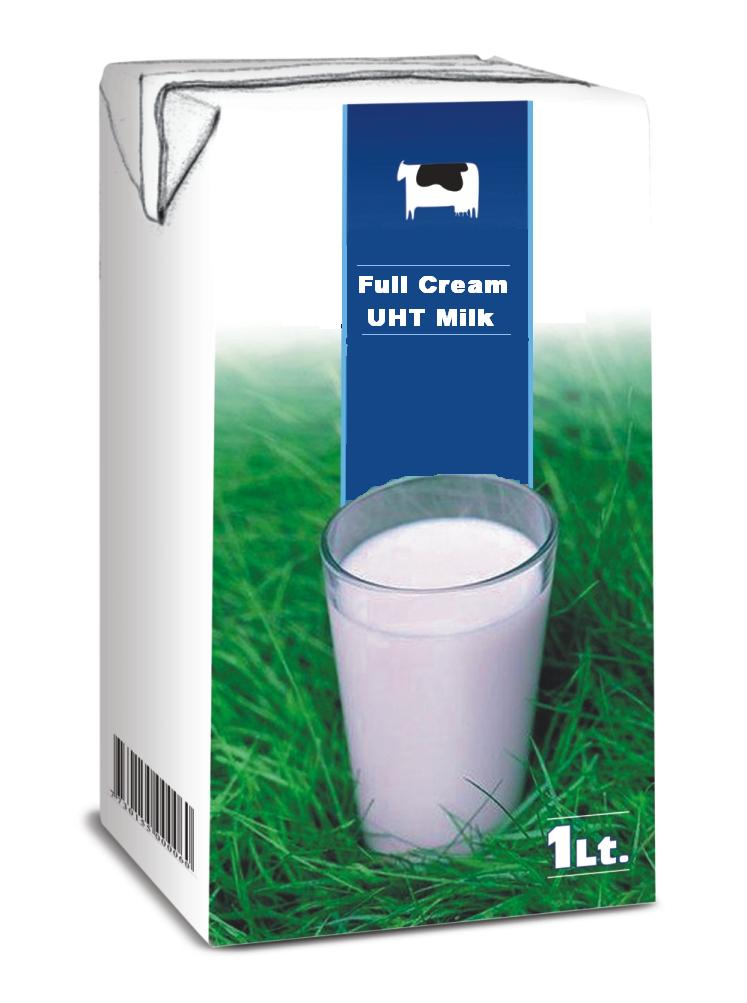
Our second sample was slightly pinky off-white and smelled distinctly caramelised. It had flavours of coconut, malt and caramel but was also more strongly metallic. The mouthfeel was most definitely drying, more so than our control sample. It was more viscous in the mouth as well. This, we discovered was UHT. The caramel flavours coming about because the milk is heated to 135C in which process the milk sugars, not surprisingly, cook.
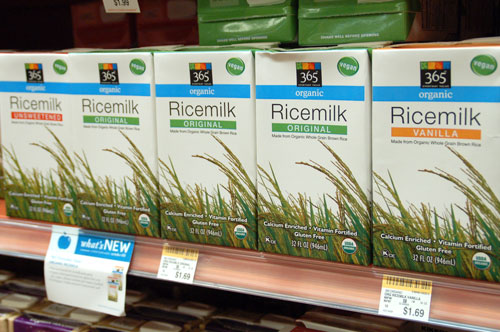
Our third sample again was off white and smelled slightly of caramel. It tasted rather odd, distinctly of vanilla and sugar and at the same time, watery. The feeling in the mouth was powdery and drying and the body was most definitely weak. Turns out it was rice milk – vanilla is added as a flavouring to make it palatable.
Sample number four was pure white and glossy, almost reflective. It smelled yeasty and had a very distinctive taste: slightly salty, caramel, coconut and most definitely GOAT. The mouthfeel was not drying – it was quite neutral – however the caramel was an indication it might be being pasteurised at too high a temperature. This often happens with all animal milks we consume ‘just to be on the safe side’.
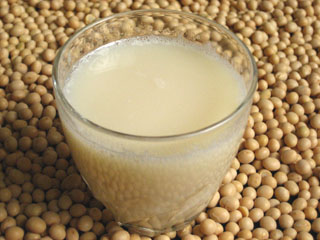
Sample five was cream in colour and smelled buttery. It tasted very sugary, mineral and nutty. It produced a definite drying sensation but was quite creamy. This was soya milk which I normally find very difficult to actually swallow so it was a pleasant surprise – well as pleasant as soya milk can be which, frankly, isn’t very.
Finally we came to sample six. It had a creamy white colour, barely any odour at all and tasted mineral, salty and slightly sour. The sensation in the mouth afterwards was most definitely drying. Jayne ‘fessed up. This was milk with dilute hypochlorite solution in it. That is, milk with bleach. You may be wondering at this moment if it’s safe to drink milk with hypochlorite in it. In fact it is. Hypochlorite and bleach work by blasting open the cell walls of the organic matter they come into contact with. In that process the solution however breaks down into its individual components which are salt, water and chlorine gas. The gas escapes of course so all that is left is water and salt. The milk therefore was completely safe and largely unaffected in flavour. I described it as being a little more salty than our control sample but not everyone did.
Just as we were about to ask Jayne, ‘If that’s the case with hypochlorite, how come you can end up with food that tastes a bit like bleach?’ she went on to say:
‘So hypochlorite in itself doesn’t taint, but you know sometimes when you make tea with chlorinated water, you get a bleach taste? That is a reaction with the phenols in the tea.’
We’ve all, in our years of cheese tasting, encountered cheeses that tasted a bit chloriney. This would likely be the same issue. As the milk is broken down by its starters it releases phenols and flavour compounds. Some of these can react with hypochlorite.
With our milk tasting over and a lot of information imparted, we had a go at ironing cheese and then stood up to help ourselves to lunch – a particularly tasty macaroni cheese Julie had hand crafted which was made all the more flirty by the addition of crispy bits of bacon and artichoke hearts. Returning after lunch, we settled down to the serious work of grading sample of cheese brought by our fellow course attendees. I didn’t get round all of them, but I happily made objective and descriptive notes on: St Jude (of course), Paul’s Little Anne & Dorothy, Jonny’s Baron Bigod (incredibly edible – in large amounts), David’s St Oswald (which I could also eat a lot of with alarming ease), Old Winchester, a lovely Gouda-esque cheese from Lyburn, David Holton’s experimental John Littlejohn and Innes Log. Perhaps inevitably, however, given the quality of cheese on offer, assessments became less objective and more subjective. We may have been writing descriptively but it was hard to stop the exclamations of ‘Wow that’s amazing!’ that seemed to crop up with every new cheese tasted.
It may be Christmas and I may be having a well earned break after a frantic couple of weeks of the Mons mongering but time and cheese wait for no woman.
When Rose and I made our decision to change our plans from making a lactic cheese to a washed rind, we knew we needed to name our cheese. The lactic cheese had had a name but it was one that suited a little cheese. We needed something with more heft.
However that was probably the least important bit of the process for then. Building the dairy seemed to be a rather more pressing matter. We put the matter of the name onto a back burner, every so often looking up local names on the map and considering them and then dismissing them. Should the name be something that carried echoes of Rose’s grandfather, Jo Grimond, who apparently returned from fighting in second world war France, carrying a huge Brie de Meaux? Should it be something local to our dairy, as the name for our lactic cheese would have been? We felt that time would probably answer these questions for us.
And so it has proved. In response to my ‘Happy Christmas’ text to Rose, I received this interesting message in return:
‘Hope you’ve had a wonderful day. All good here. Eaten a lot of Hafod over the last few days. Was in church this morning and thought as I looked upon the donation envelope that the name of the church, next door to our facility, would work quite well for a cheese. What do you think? St Bartholomew’s.’
St Bartholomew’s. St Bartholomew’s. I tried it out in my mind and out loud a couple of times and I like the way it sounds.
It’s extremely local, the church is going to be our next door neighbour, and on quickly googling St Bartholomew himself, I discover that he is the patron saint of Florentine cheese. Wikipedia and the internet at large differs in opinion as to whether he is the patron saint of Florentine cheesemakers or cheese merchants but quite possibly the merchants were in fact also the makers. In any case the details are less important than the fact he’s (one of) the patron saint(s) of cheese!
It seems like a most auspicious omen. Bring on 2014!
Well, first off, apologies for a long absence. It’s not that I’ve been doing nothing worth writing about, it’s pure disorganisation. However to remedy this, it’s time to put pen to paper or rather fingers to keyboard and talk about something I’ve been superstitiously not blogging in case of jinxing the operation…. Nettlebed Creamery.
So, what has changed? Well, it’s fast becoming the worst kept secret in my life anyway, as I talk about it to everyone I meet and progress is being made, so it’s time to set it out on the world wide web for all to see.
What is Nettlebed Creamery I hear you cry? Well, are you sitting comfortably? Then I’ll begin…
Back in the winter of 2012 as I sat surrounded by snow up a hill in Cumbria, I began looking for my next cheesemaking venture. The time had come to move on from Holker, Martin and Nicola needed someone local who would be able to be a more permanent fixture and believed they had found someone, I wanted to try other types of cheesemaking. A couple of possibilities presented themselves, Old Hall Farm in Cumbria which as we all know now didn’t work out, and the tantalising possibility of cheesemaking with Rose Grimond in Oxfordshire.
I had met Rose, on a number of occasions, through my sister Jane who, while working on the Mons Cheesemongers Borough Market stall way back in about 2007, had been introduced to the stallholder next door and got chatting. Rose, at that time, was acting as a representative, promoter, wholesaler and retailer of produce from Orkney. Part of that involved a stand at Borough Market which sold meat, cheese, oatcakes and smoked fish but probably most excitingly for Jane and me, the sweetest, juiciest scallops (‘as big as yer heeed’ as Jane remarked) and fresh sea urchins. We had many a delicious weekend seafood treat courtesy of the Orkney Rose stand. However, fast forwarding about 5 years, Rose had wound up her retail and wholesale business, moved to her family home of Nettlebed in south east Oxfordshire and had her first little boy. Surfacing from new motherhood as her son grew a little older, Rose began to look for another business to get her teeth into.
Nettlebed Estate, the family estate run by her mother and her aunt, has an organic dairy herd of Friesian Holsteins crossed with Montbeliard and Swedish Red. The milk of this carefully managed and farmed herd was and is being sold to Dairycrest for drinking milk. Dairycrest delivered the bad news that the organic milk market was at capacity, so they would be cutting the organic premium they had been paying and would quite probably be looking at further cuts in future. The farm and estate owners met to discuss how to proceed.
The wisdom in farming is that to succeed you have to get big, get different or get out.
Options A and C didn’t appeal but getting different did.
‘We should be making cheese!’ Rose opined with enthusiasm.
At first they pursued the idea with a local lady looking to change career and make cheese, but ultimately parted company due to different ideas of what to make. Around this point, I entered the scene.
Initially, I contacted Rose because I was looking to arrange a month or so perhaps, working at Grimbister Cheese on Orkney making Seator’s Orkney cheese. I still haven’t done this, but priorities have changed a bit since then. I wondered if she had contact details and any recommendations of somewhere to rent for the duration. During those enquiry emails we skated around the topic of cheesemaking:
‘Oh so you’re making cheese, how interesting….’
‘Oh so you want to make cheese on your estate and need a cheesemaker, how interesting….’
Finally, after meeting the family and farm managers, Rose and I began work in earnest to get the cheesemaking enterprise off the ground. We looked at potential sites for a creamery and chose one, then changed our minds, then changed our minds again, then again. Each had its advantages and disadvantages. One of them seemed on balance to have more advantages than disadvantages until we got down the planning permission route and hit a dead end over an access road. Finally we are back with the one we first thought of and that Rose had always had her eye on. Planning permission applications are being drawn up again and the business plan that Rose created a year or so ago is being revised yet again to accompany our application.
This time, I am pretty confident that we won’t change our minds again. Maybe that is what prevented me putting fingers to keyboard before. This choice of site is for keeps… unless the council say otherwise.
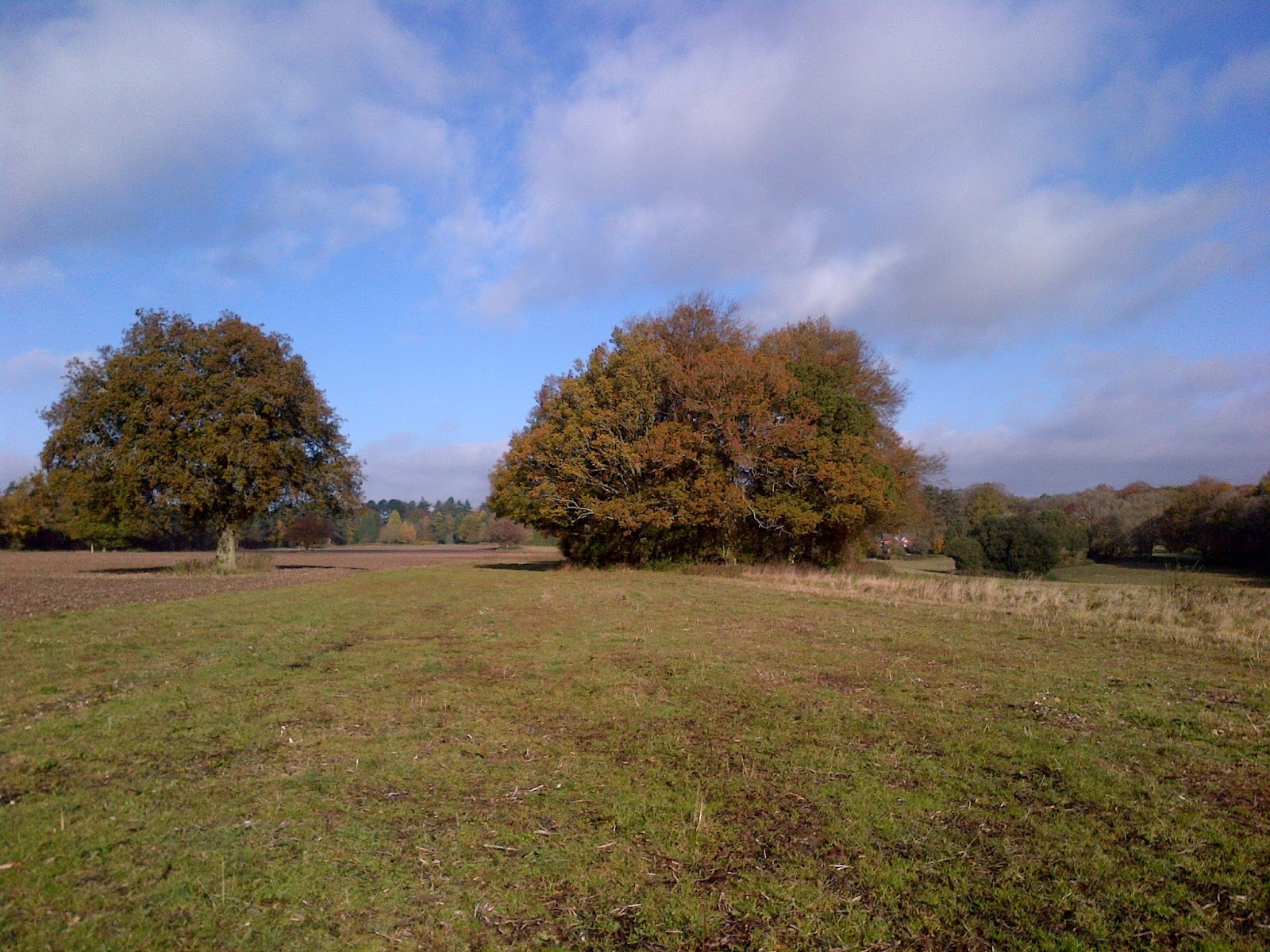
The view from one of our former sites because I’ve not got a picture of the current one yet.





 The Cheese Making Years